

What to plan before driving abroad: fuel and charging costs, tolls and vignettes, route planning, accommodation, parking, food, insurance, car checks and unexpected expenses.
Planning a road trip before departure can save money, reduce stress and prevent expensive surprises along the way. Before you start driving, check the full cost of the journeynot just fuel or charging. Your preparation should cover the route, fuel or charging stops, tolls, accommodation, parking, food, payment methods, insurance and possible emergency costs.
1. Plan the route and the total travel budget
Start by planning the complete route before you leave. Check the countries you will pass through, the planned stops, traffic conditions, construction work, toll roads, vignettes, environmental zones and possible ferry crossings. ADAC route planning can be used to check routes, traffic information, tolls, vignettes, fuel prices and charging stations.
Instead of calculating only the fuel cost, create a complete road-trip budget that includes fuel or electricity, motorway tolls, vignettes, tunnels, bridges, ferries, parking, accommodation, food, payment fees and an emergency reserve. Comparing the total cost of different routes can be more useful than simply choosing the shortest route. techniques that inspire creativity in every project.
2. Check fuel prices before departure
If you are travelling with a petrol or diesel car, check fuel prices along your planned route before leaving. Prices can vary considerably between countries, so it can be worthwhile to decide in advance where you will refuel. ADAC fuel-price information for Europe provides current comparisons for European countries.
It is also worth planning to refuel away from motorway service stations whenever practical. According to the latest ADAC comparison, motorway petrol stations were significantly more expensive than stations away from the motorway in its 2026 survey. ADAC motorway fuel-price comparison
Before departure, also check your vehicle’s expected fuel consumption, the tank capacity and the type of fuel it requires. This gives you a more realistic estimate of the fuel budget for the entire journey.
3. Prepare your EV charging plan
Combi3. Prepare your EV charging plan
If you are travelling with an electric car, charging should be part of the route plan before departure. Check the available charging stations along the route and at your destination, including their charging power, payment methods and availability. ADAC’s European charging-station guide provides information about charging infrastructure, payment options and charging stations in European travel destinations.
Don’t plan your trip around the assumption that the nearest charger will always be available. Leave a reasonable range of reserve and identify alternative charging points in case a station is occupied or unavailable. ADAC recommends planning charging stops in advance and allowing a remaining battery capacity of around 10–20% when planning the next charging stop.
Also check which charging cards or apps work at the stations you intend to use. Payment options can differ between countries and providers, so having a suitable charging card or app—and an alternative payment method—can prevent problems during the journey.
If possible, choose accommodation with charging facilities. This can be particularly useful in destinations where public charging infrastructure is less developed.visually stunning compositions.
4. Check tolls, vignettes and special road charges
Before leaving, check the motorway and road-toll requirements for every country on your route, including transit countries. European countries use different systems, including vignettes, distance-based tolls and electronic toll systems. ADAC’s Europe toll guide provides an overview of the different systems.
Buy required vignettes or digital toll products early enough and verify the vehicle registration number, vehicle class and validity period before completing the purchase. Also check whether tunnels, bridges, environmental zones or city tolls create additional charges.
If you are travelling with a rental car, check the toll arrangements with the rental company before departure. Rental vehicles are subject to the same toll regulations as private vehicles, and additional vignettes or electronic toll devices may be required.
5. Compare the route before booking everything
Do not compare routes based only on Kilometers or driving time. Before booking accommodation, compare the complete cost of each realistic route, including fuel or charging, tolls, ferries, parking and possible overnight stops.
A slightly longer route may sometimes avoid expensive tolls, while a supposedly cheaper route may require considerably more fuel or an additional overnight stay. The best comparison is therefore the total journey cost, not one individual expense.

6. Choose accommodation based on the total price
When booking accommodation, do not look only at the room rate. Check whether parking costs extra, whether breakfast is included, whether there are additional fees and, for electric cars, whether charging is available.
Accommodation outside a city centre can sometimes reduce both the room price and parking costs. For longer stays, also compare hotels with apartments or other accommodation that provides kitchen facilities, because preparing some meals yourself can reduce food expenses.
For EV trips, check the charging conditions at the accommodation before booking: whether charging is available, what connector is provided and whether an additional fee applies.
7. Consider the travel season and departure time
The timing of the journey can affect both the driving experience and the cost. Before booking, consider whether you are travelling during a major holiday period and whether your route will be affected by peak traffic.
For electric cars, travel times can also affect access to charging stations because more Traveller may be competing for available chargers during peak periods.
Before departure, check the traffic situation, construction sites and expected congestion. ADAC Maps and ADAC Drive combine route planning with current traffic, fuel and charging information. techniques that inspire creativity in every project.
8. Plan parking before arriving
Parking should be part of the travel plan rather than something you solve after reaching your destination. Check whether your accommodation provides parking, how much it costs and whether cheaper public alternatives are available.
For city trips, look at Park & Ride options before departure. If you are flying from an airport, compare airport parking with shuttle parking outside the airport area.
For longer trips, also check local parking rules in the countries you are visiting. The rules, parking discs and payment systems may differ from those you use at home.
9. Plan food and drinks for the journey
Prepare food, snacks, water and drinks before departure instead of relying entirely on motorway service stations. Buying provisions from a supermarket can reduce the cost of meals and drinks during the journey.
For longer trips, particularly with children, a cooler can make it easier to take food and drinks with you. You can also check whether your accommodation has a kitchen so that some meals can be prepared yourself rather than eating out every day.
10. Compare ferry options if your route requires one
If the journey includes a ferry, compare prices, departure times and vehicle requirements before booking. The price can depend on the vehicle’s dimensions and whether you are carrying a roof box, bicycle rack or trailer.
Include the ferry in your overall route comparison. Compare the complete cost of the ferry route with alternative routes after taking fuel, tolls, travel time and possible accommodation into account.
11. Prepare your payment methods
Before travelling abroad, check whether your bank or card provider charges foreign-currency transaction fees, cash-withdrawal fees or other international charges.
Take more than one payment method with you. A second card or another form of payment can be useful if your primary card is lost, blocked or not accepted.
When travelling outside the eurozone, also check how currency conversion works when paying by card or withdrawing cash. If a terminal or ATM offers to convert the payment directly into euros, compare the offered exchange rate with the conversion method used by your card provider.
12. Check the car before departure
A few days before the trip, inspect the vehicle rather than waiting until departure day. Check the tyres and tyre pressure, engine oil, coolant, lights, windscreen wipers and brakes. Also check the vehicle’s first-aid kit and any required emergency equipment. These checks are part of the preparation recommended in the original source.
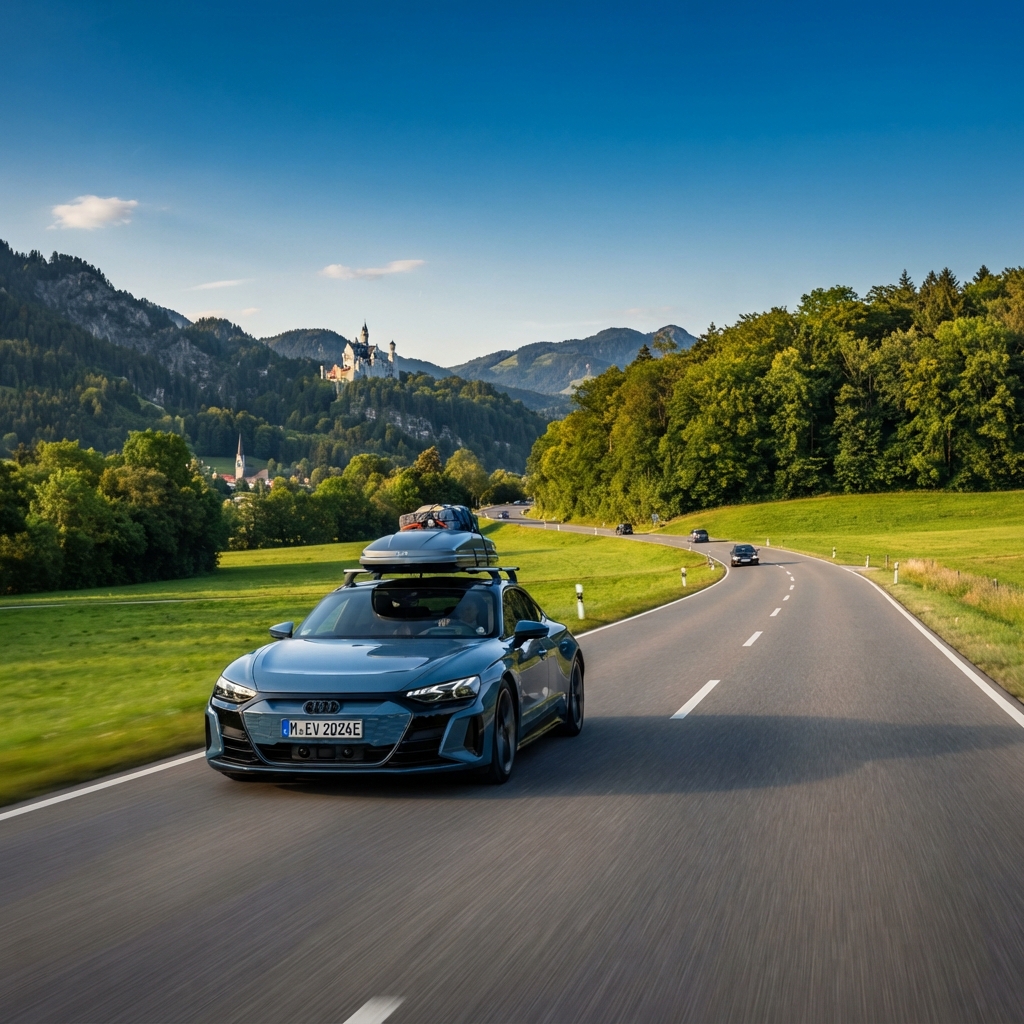
Remove unnecessary weight from the vehicle before travelling. If you are using a roof box, bicycle rack or other carrier, make sure it is genuinely needed because additional equipment can increase aerodynamic resistance and fuel consumption.
If a warning light is already illuminated or the car is behaving unusually, have the problem checked before departure rather than risking a more expensive repair during the trip.

Before You Leave: Quick Checklist
.
- Check the complete route and all countries you will cross.
- Calculate fuel or charging costs.
- Compare fuel prices along the route.
- Plan EV charging stops and alternative chargers.
- Check tolls, vignettes, tunnels, bridges and environmental zones.
- Compare alternative routes by total cost.
- Book accommodation and check parking costs.
- Check charging availability at the accommodation if travelling by EV.
- Consider the travel season and peak travel times.
- Plan parking at major destinations.
- Prepare food, drinks and a cooler for the journey.
- Book and compare ferry options if required.
- Check foreign-currency and card fees.
- Prepare a backup payment method.
- Check tyres, fluids, brakes, lights and other essential vehicle components.
- Review insurance and roadside assistance.
- Keep an emergency budget for unexpected expenses.